How to Think in English Instead of Translating: The Secret to Speaking English Fluently
Introduction
Have you ever found yourself translating every sentence from your native language into English before speaking?
If yes, you’re not alone.
Many English learners struggle with this habit. While translation may help beginners understand basic vocabulary, it becomes a major obstacle when your goal is to speak English fluently, confidently, and naturally.
Whether you’re preparing for IELTS, CELPIP, PTE, Duolingo English Test, studying abroad, immigrating to Canada, or simply improving your communication skills, learning to think directly in English can dramatically improve your speaking speed and confidence.
In this guide, you’ll learn practical strategies to stop translating in your head and start thinking in English naturally.
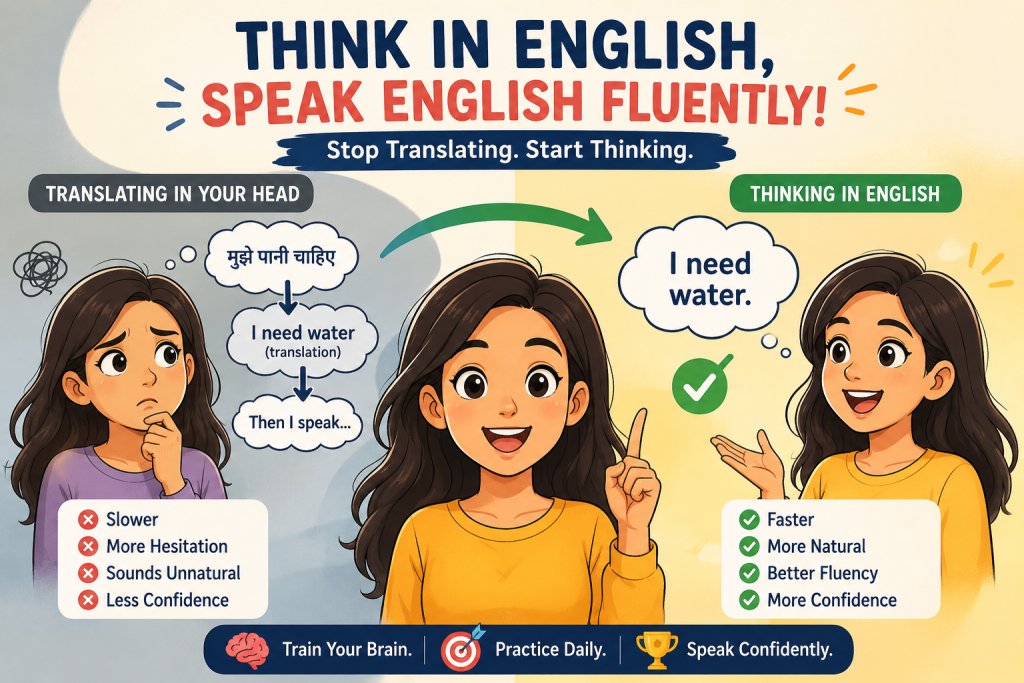
Why Translating Slows Down Your English
Let’s understand what happens when you translate:
Native Language → Translation → English → Speaking
This process takes time and mental effort. As a result:
- You hesitate while speaking.
- Your speech sounds unnatural.
- You forget words under pressure.
- You lose confidence during conversations.
- Speaking tests become more stressful.
In exams like IELTS and CELPIP, hesitation can affect your fluency score. Examiners want to hear smooth, natural communication—not perfectly translated sentences.
What Does It Mean to Think in English?
Thinking in English means your brain processes ideas directly in English without converting them from another language first.
For example:
❌ Translation Method:
“I am hungry” → First think in Punjabi/Hindi → Then translate → Then speak.
✅ English Thinking Method:
Feel hungry → Think “I’m hungry” instantly.
The second method is how fluent speakers communicate.
7 Practical Ways to Start Thinking in English
1. Narrate Your Daily Activities
One of the easiest ways to train your brain is to describe what you’re doing throughout the day.
Examples:
- “I’m brushing my teeth.”
- “I’m making coffee.”
- “I need to reply to this email.”
- “The weather looks nice today.”
This exercise builds automatic thinking patterns in English.
Practice Goal: 5–10 minutes daily.
2. Learn Phrases Instead of Individual Words
Many students memorize vocabulary lists but still struggle to speak fluently.
Instead of learning:
- Opportunity
- Challenge
- Improve
Learn complete phrases:
- “I had the opportunity to…”
- “One challenge I faced was…”
- “I want to improve my English skills.”
Your brain recalls phrases faster than isolated words.
This technique is particularly useful for IELTS Speaking and CELPIP Speaking.
3. Change Your Inner Voice to English
Throughout the day, we constantly talk to ourselves.
Start using English for this internal conversation.
Examples:
- “What should I eat today?”
- “I need to finish this task.”
- “I’m feeling tired.”
At first it may feel strange, but after a few weeks it becomes natural.
4. Stop Translating Every New Word
When learning vocabulary, avoid translating immediately.
Instead:
❌ “Generous = [translation]”
✅ Think:
“Generous means someone who likes helping others and sharing things.”
Learning meanings in English helps your brain stay in English mode.
5. Read Simple English Every Day
Reading trains your brain to recognize natural sentence structures.
Good options include:
- News articles
- Blogs
- English learning websites
- Short stories
- Social media posts
Don’t focus on understanding every word.
Focus on understanding the overall message.
Even 15 minutes daily can make a noticeable difference.
6. Watch English Content Without Subtitles
Many learners depend too much on subtitles.
Try this progression:
Week 1:
- English audio + native language subtitles
Week 2:
- English audio + English subtitles
Week 3:
- English audio without subtitles
This gradually forces your brain to process English directly.
Recommended content:
- YouTube videos
- Podcasts
- TED Talks
- Interviews
- English news channels
7. Practice Speaking Before Perfection
Many students wait until their English is perfect before speaking.
This is a mistake.
Fluent speakers became fluent because they spoke regularly—even when making mistakes.
Remember:
Fluency comes first. Accuracy improves with practice.
Try:
- Speaking to friends in English
- Joining online speaking groups
- Recording yourself daily
- Participating in mock speaking sessions
A Simple 15-Minute Daily Routine
Morning (5 Minutes)
Think about your plans for the day in English.
Example:
- “I have a meeting at 2 PM.”
- “I need to study for IELTS.”
Afternoon (5 Minutes)
Narrate your activities mentally.
Example:
- “I’m preparing lunch.”
- “I’m checking my emails.”
Evening (5 Minutes)
Reflect on your day in English.
Example:
- “Today was productive.”
- “I completed my study goals.”
Within a few weeks, you’ll notice that English thoughts start coming automatically.
Common Mistakes to Avoid
Trying to Translate Complex Sentences
Keep your thoughts simple.
Instead of:
“I would like to articulate my perspective regarding…”
Say:
“I want to share my opinion about…”
Memorizing Without Using
Vocabulary only becomes useful when you actively use it.
Being Afraid of Mistakes
Mistakes are part of language learning.
Every fluent speaker made thousands of mistakes before becoming fluent.
How Thinking in English Helps IELTS and CELPIP Students
Students who think directly in English often:
✅ Respond faster in speaking tests
✅ Sound more natural
✅ Show better fluency
✅ Reduce hesitation
✅ Communicate ideas more clearly
This can contribute to higher scores in:
- IELTS Speaking
- CELPIP Speaking
- PTE Speaking
- Duolingo English Test Interview Sections
Final Thoughts
Learning to think in English is one of the most powerful habits you can develop as an English learner.
The goal isn’t to stop making mistakes overnight. The goal is to reduce the time between having a thought and expressing it.
Start small:
- Think simple thoughts in English.
- Narrate your day.
- Use English for your inner conversations.
- Practice consistently.
With daily effort, you’ll gradually stop translating and start speaking English naturally and confidently.
Remember: Fluent English isn’t about knowing more words—it’s about thinking directly in English.
Need Help Improving Your English Fluency?
At C2 Prep, we help students improve their English communication skills through personalized feedback, speaking practice, IELTS preparation, CELPIP coaching, PTE training, and Duolingo English Test guidance.
Whether your goal is immigration, study abroad, or professional growth, our expert trainers can help you communicate with confidence.