Latest Canada PR Rules (2026): A Complete Guide for International Students
Canada has long been one of the most preferred destinations for international students due to its high-quality education, work opportunities, and clear pathway to Permanent Residency (PR). However, in 2025–2026, the PR system has evolved significantly. It is no longer just about completing your studies and applying—strategy, planning, and skill alignment are now critical.
This detailed guide will help you understand the latest PR rules, trends, and the smartest pathway to settle in Canada as a student.
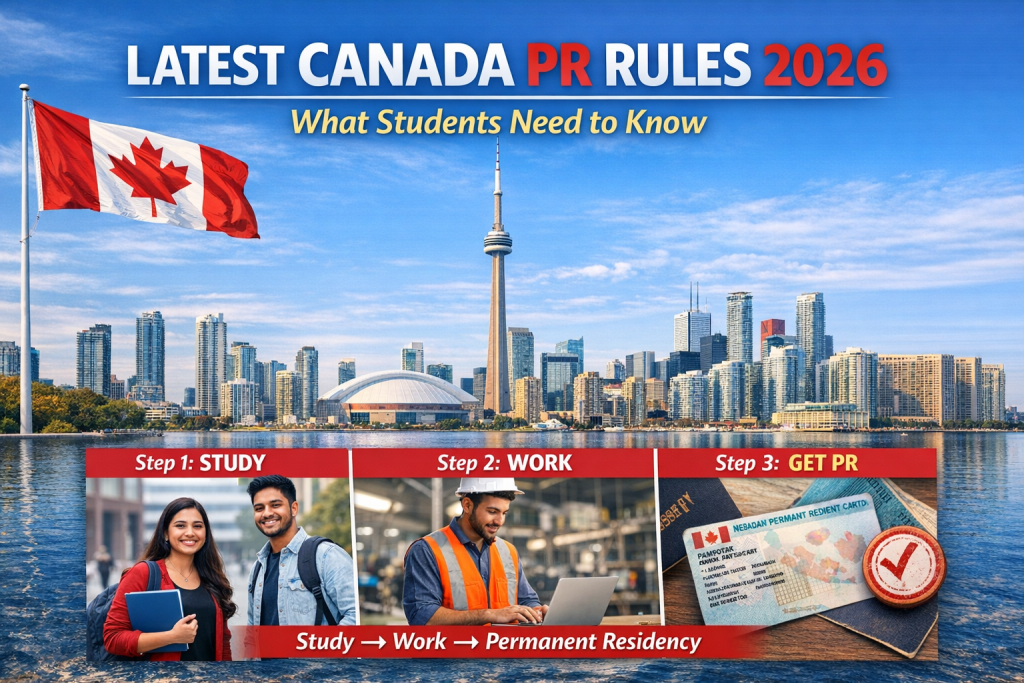
1. Understanding the Canada PR Pathway
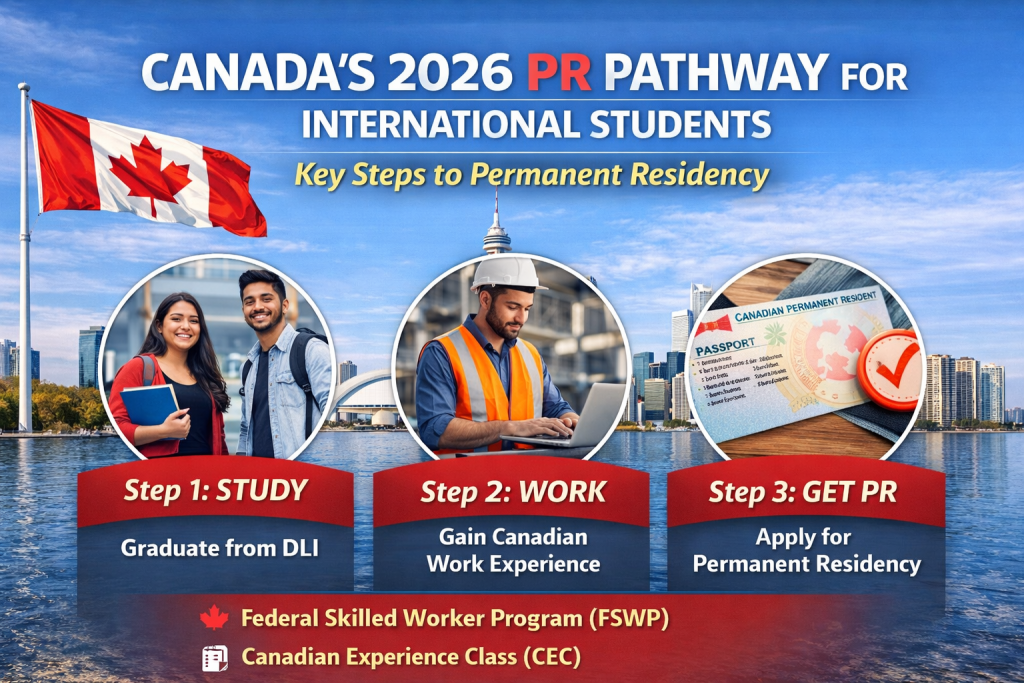
Unlike some countries, Canada does not offer direct PR to most international students. Instead, the journey typically follows three stages:
Stage 1: Study in Canada
You enroll in a recognized institution (DLI) and complete your program.
Stage 2: Work in Canada
After graduation, you apply for a Post-Graduation Work Permit (PGWP), allowing you to gain Canadian work experience.
Stage 3: Apply for PR
You apply through one of the immigration pathways:
- Express Entry (CEC, FSW, FST)
- Provincial Nominee Program (PNP)
This system is designed to ensure that applicants are economically ready and skilled before becoming permanent residents.~
2. Key Changes in Canada PR Rules (2025–2026)
A. Category-Based Express Entry Draws
One of the biggest changes is the introduction of category-based selection in Express Entry.
Instead of only selecting candidates based on CRS score, Canada now prioritizes specific sectors.
Priority Categories Include:
- Healthcare (nurses, doctors, caregivers)
- STEM (IT, engineers, developers)
- Skilled trades (electricians, plumbers)
- Transport (truck drivers, logistics workers)
- Agriculture & agri-food
- French language proficiency
Impact:
Even if your CRS score is slightly lower, you may still receive an invitation if your profile matches these high-demand categories.
B. CRS Score Still Matters (A Lot)
Despite category draws, CRS (Comprehensive Ranking System) remains a major factor.
Typical High CRS Requirements:
- General draws: ~490+
- Category draws: Lower but still competitive
Key Factors Affecting CRS:
- IELTS / CELPIP score
- Education level
- Age
- Canadian work experience
- Job offer (LMIA-approved)
Students must focus on maximizing their profile early, especially English scores.
C. PGWP Rules Becoming More Selective
The Post-Graduation Work Permit (PGWP) is still one of the most important steps—but rules are tightening.
Key Developments:
- Some private colleges may not qualify
- Field of study may influence eligibility
- Increased focus on job-relevant programs
Choosing the wrong college or course can destroy your PR chances.
D. Provincial Nominee Programs (PNPs) Are More Important Than Ever
Many students are now getting PR through PNP instead of Express Entry.
Popular PNP Options:
- Ontario Immigrant Nominee Program (OINP)
- British Columbia Provincial Nominee Program (BC PNP)
- Alberta Advantage Immigration Program (AAIP)
- Saskatchewan Immigrant Nominee Program (SINP)
- Manitoba Provincial Nominee Program (MPNP)
Each province selects candidates based on:
- Local labor market needs
- Occupation demand
- Employer support
E. Shift Toward Skills-Based Immigration
Canada is moving away from purely academic profiles.
What Canada Wants Now:
- Skilled workers
- Job-ready candidates
- People filling labor shortages
A degree alone is no longer enough—you need employable skills.
3. Best Courses for PR in 2026
Your course selection directly impacts your PR success.
High-Demand Fields:
- Healthcare (Nursing, PSW)
- Information Technology (Software, Cybersecurity)
- Engineering (Civil, Mechanical, Electrical)
- Skilled Trades
- Logistics & Supply Chain
- Data Analytics
These fields align with category-based draws and PNP demand.
4. Common Mistakes Students Must Avoid
Many students fail not because PR is impossible—but because of poor planning.
Biggest Mistakes:
- Choosing random or low-value courses
- Studying in non-eligible colleges
- Low IELTS score (below CLB 9)
- Doing survival jobs only
- Ignoring PR planning until last moment
Remember: PR planning starts before you even apply for your visa.
5. Step-by-Step PR Strategy for Students
Step 1: Choose the Right College & Program
- Prefer public colleges
- Select PR-friendly courses
Step 2: Aim for High English Scores
- Target CLB 9 or above
Step 3: Get a Skilled Job
- Focus on TEER 0, 1, 2, or 3 jobs
Step 4: Gain Canadian Work Experience
- Minimum 1 year required for CEC
Step 5: Apply Through Multiple Pathways
- Express Entry
- PNP (backup strategy)
6. Is Canada PR Still Easy in 2026?
The reality:
- Not as easy as before
- Still achievable with the right strategy
Canada is not closing its doors—it is simply becoming more selective.
7. Expert Tips to Increase Your PR Chances
Start planning from Day 1
Choose career-focused programs
Build strong communication skills
Network and gain real job experience
Stay updated with immigration rules
Conclusion
The dream of settling in Canada is still alive—but now it belongs to those who are prepared, informed, and strategic.
Don’t just go to Canada to study—go with a clear PR plan.
By :- Sarthak Tiwari, Office Assistant, C2 Prep